

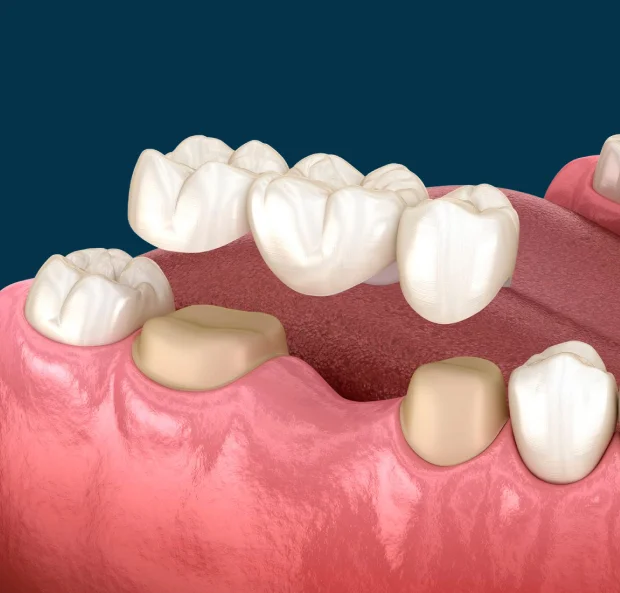
Who Can Benefit from a Dental Bridge
A bridge is a good option for many patients who are missing teeth, as long as the surrounding teeth and gums are healthy. During your exam, Dr. Patel will evaluate your bite, the condition of the neighboring teeth, and your overall oral health. You may be a good candidate for a bridge if the following applies to you.
- You are missing one tooth or several teeth in a row
- The teeth next to the gap are strong enough to support crowns
- Your gums are healthy and free of active infection
- You want a fixed, natural-looking way to restore chewing and your smile
Benefits of Replacing Missing Teeth
Every tooth plays a role in how you chew, speak, and smile, so even one gap can have a ripple effect. A bridge restores your ability to bite and chew comfortably, which makes it easier to enjoy the foods you love. It also helps keep neighboring teeth in place and supports a balanced bite over time. Because the porcelain is matched to your natural teeth, the result looks seamless and many patients find that filling a gap gives them more confidence in everyday conversations and photos.
From Preparation to a Finished Bridge
Getting a dental bridge is a straightforward process, and our team keeps you informed at each stage. The timeline depends on your needs and on whether your bridge can be completed with our in-office technology. Here is how it generally works.
01
Consultation and Exam
Dr. Patel examines your teeth, gums, and bite and reviews any X-rays. He then explains your options and recommends the bridge design that suits you.
02
Preparing the Supporting Teeth
The teeth on either side of the gap are gently shaped so they can hold the crowns that anchor the bridge. We numb the area when needed to keep you comfortable.
03
Digital Impression
Instead of traditional impression trays, Dr. Patel captures a digital impression of your teeth. This guides the computerized tools that craft your restoration.
04
Designing and Crafting
Using CAD/CAM technology, your bridge is designed on screen and made from porcelain selected to match your natural shade. Dr. Patel will let you know whether yours can be completed in a single visit.
05
Fitting and Bonding
Dr. Patel checks the fit and your bite, then bonds the bridge securely in place. He makes any small adjustments so it feels natural when you chew.
06
Final Polish and Aftercare
The bridge is polished for a smooth, natural finish. We review simple care instructions so you know how to keep it clean and healthy.
Types of Dental Bridges
Dental bridges come in several designs, and the right one depends on where the gap is, the health of the neighboring teeth, and your goals. Dr. Patel will examine your teeth and recommend the design that gives you a strong, comfortable, and natural-looking result. Here are the main types of bridges you may hear about during your consultation.
- Traditional bridges. This is the most common design. Crowns on the teeth on either side of the gap hold the replacement tooth or teeth securely in place.
- Cantilever bridges. When there is a healthy tooth on only one side of the gap, the bridge can be anchored to that single neighboring tooth.
- Implant-supported bridges. Instead of relying on natural teeth, the bridge is anchored by dental implants. This can be a strong option when several teeth are missing.
Caring for a Dental Bridge
A bridge can last for many years when it is cared for well. The teeth that support it still need attention, since plaque can build up around the crowns and beneath the replacement teeth. Here are a few habits that help protect your bridge.
- Brush twice a day and clean carefully around the bridge
- Floss daily, using a floss threader or small brush to clean beneath the bridge
- Avoid chewing ice, hard candy, or other very hard items
- Keep up with regular cleanings and exams at our Honolulu office
Fill the Gap and Smile Again
You do not have to live with the gaps left by missing teeth. If you are ready to restore your smile and your ability to chew comfortably, request an appointment with Hawaii Pacific Dental Group today. Dr. Patel and our friendly Honolulu team will explain your options, review your insurance benefits, and help you find a time that works for you.
Request an AppointmentFrequently Asked Questions About Dental Bridges
A dental bridge is a fixed restoration that replaces one or more missing teeth with artificial teeth held in place by crowns on the neighboring teeth. Hawaii Pacific Dental Group offers porcelain bridges in Honolulu that are tinted to match your natural smile.
The crowns on the teeth next to the gap act as anchors, and the replacement tooth or teeth fill the space between them. This restores your bite, helps you chew and speak comfortably, and keeps nearby teeth from shifting.
With CEREC and CAD/CAM technology, some bridges can be designed, crafted, and placed in a single visit at our office. The timing depends on the number of missing teeth and your treatment plan, and Dr. Patel will explain what to expect during your consultation.
Most patients are comfortable during the procedure because we numb the area when needed. Our Honolulu team works gently and explains each step, and sedation dentistry options are available for patients who feel nervous.
With good oral hygiene and regular checkups, a dental bridge can last for many years. How long it lasts depends on factors such as the health of the supporting teeth, your bite, and how well you care for the bridge.
Brush twice a day, and floss every day using a floss threader or small interdental brush to clean beneath the bridge. Regular cleanings and exams at Hawaii Pacific Dental Group help keep the bridge and the supporting teeth healthy.
Yes, Dr. Patel can replace missing teeth with dental implants, which are then restored with crowns or bridges. During your consultation, he will review your oral health and explain which option is the best fit for you.
Many dental insurance plans cover part of the cost of bridges, though coverage varies. Hawaii Pacific Dental Group accepts most dental insurance, in and out of network, and our team will gladly verify your benefits and explain your costs before treatment begins.